
Montebello, CA homeowners face a specific thermal challenge: summer temperatures regularly push into the 90s°F while mild winters still cool attics and walls enough to drive up heating bills. Choosing the right insulation material determines how well your home handles both extremes. Armour Montebello Insulation, an insulation contractor serving Montebello and the surrounding communities of Commerce, Pico Rivera, Monterey Park, and East Los Angeles, offers every major insulation material covered on this page. Use this guide to compare your options, understand what works best where in your home, and request a free estimate when you're ready to move forward.
What are the main types of insulation?
Insulation products fall into four broad categories based on how they are manufactured and installed: blanket or batt insulation, loose-fill insulation, spray-applied insulation, and rigid board insulation. Each category behaves differently, suits different parts of a home, and carries a different installed cost. Within those categories, the most common materials are fiberglass, mineral wool, cellulose, open-cell spray foam, closed-cell spray foam, and extruded or expanded polystyrene rigid board. Understanding the category first helps you narrow the field before comparing specific materials. The sections below break each material down in detail, starting with what is most common in Montebello's housing stock.
Which insulation materials are used in Montebello homes?
Montebello's residential housing stock is dominated by mid-century single-family homes built between the 1940s and 1970s, most of which were originally insulated—if at all—with fiberglass batts in wall cavities and little or nothing in attic floor systems. Older construction in this area frequently used 2×4 wall framing, which limits cavity depth and therefore limits the R-value achievable with batts alone. Because of Montebello's dry Southern California climate, vapor drive through walls is low compared to humid regions, which means vapor-retarder requirements are less restrictive and open-cell spray foam or cellulose are both viable wall options without the vapor-barrier concerns common in colder climates. We regularly work with fiberglass batts, blown-in cellulose, mineral wool, spray foam, and rigid board across Montebello properties. The right starting point depends on whether the wall cavity is open (new construction or gut renovation) or closed (retrofit), and that decision point applies to every material discussed below.
Free, no-obligation estimates
Talk to Armour Montebello Insulation
Tell us what you need and we’ll take it from there.
Fiberglass insulation: batts and loose-fill
Fiberglass is the most widely installed insulation material in the United States, available as pre-cut batts or rolls and as loose-fill blown into attics or wall cavities. Batts are the default choice for open stud or joist bays during new construction or remodels because they require no special equipment and can be installed quickly. Loose-fill fiberglass is blown through a hose and settles into irregular spaces, making it useful for attic floors where existing joists create an uneven field. The key limitation of fiberglass batts in retrofit situations is air leakage: batts do not seal gaps around wiring, pipes, or framing voids, so air can bypass the insulation entirely and reduce its real-world performance. Proper installation requires cutting batts to fit snugly without compression—compressed fiberglass loses R-value because the air pockets that do the insulating work are squeezed out. In Montebello's older homes, misfit or compressed batts are one of the most common causes of underperforming attic insulation. Addressing those gaps before or during installation is a process step we always include in our assessment. Once you understand fiberglass as the baseline, spray foam becomes easier to evaluate as a higher-performance alternative.
Spray foam insulation: open cell vs closed cell
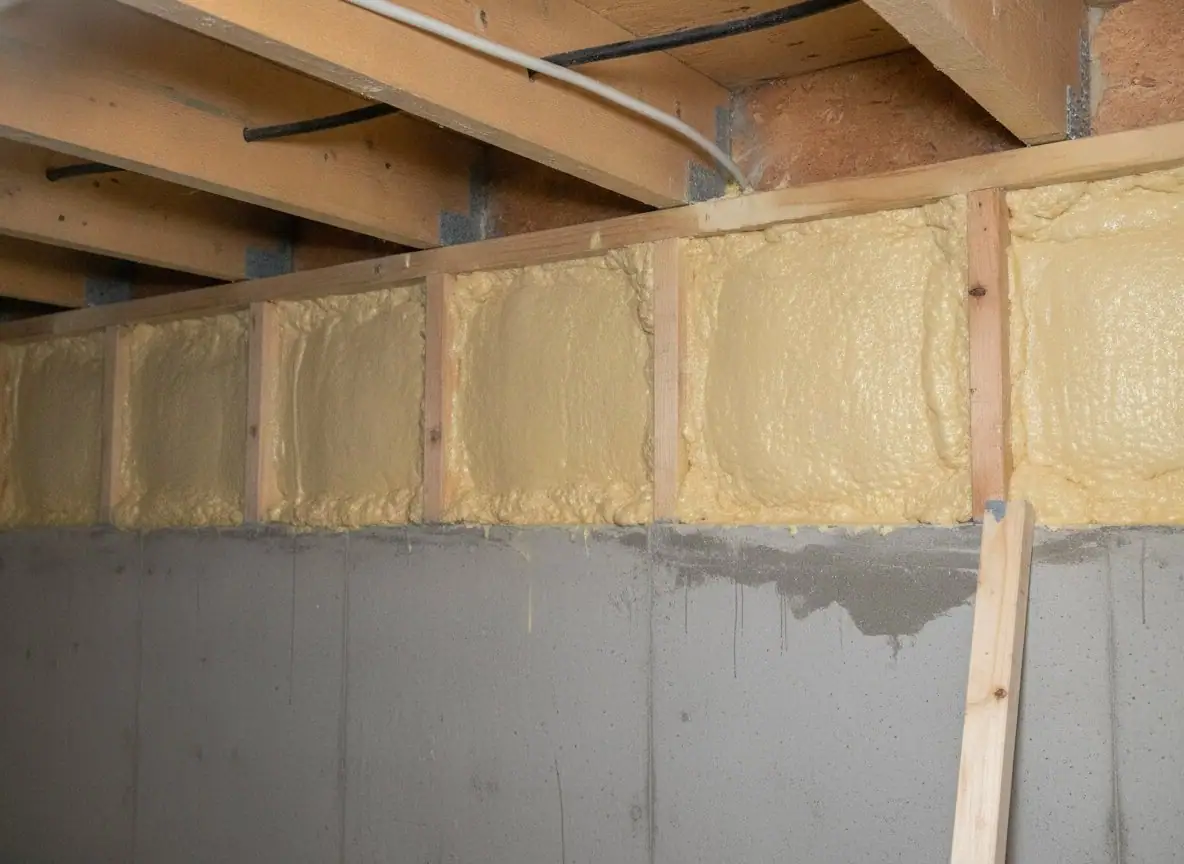
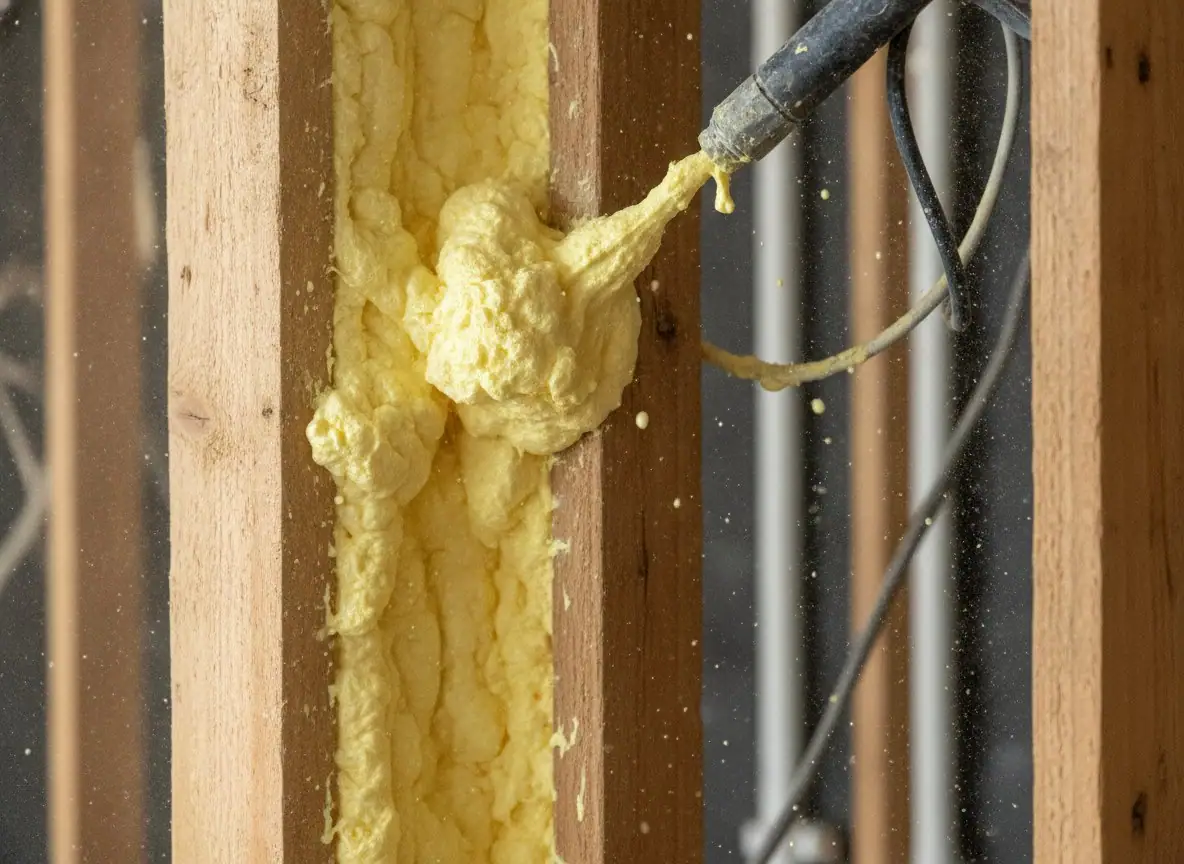
Spray foam insulation is applied as a liquid that expands and cures in place, simultaneously insulating and air-sealing in a single step. Open-cell spray foam expands to a soft, spongy texture, achieves roughly R-3.5 to R-3.7 per inch, and allows some vapor transmission—making it well-suited for interior wall cavities and attic undersides in Montebello's dry climate where trapped moisture is rarely a problem. By contrast, closed cell spray foam expands to a rigid, dense texture, achieves R-6 to R-7 per inch, and acts as both a vapor retarder and an air barrier—making it the preferred choice for crawl spaces, exterior walls where maximum R-value in a thin profile matters, and flat or low-slope roofs common on many Montebello commercial and mixed-use properties. The practical decision rule between the two: use open-cell when budget is the primary concern and the assembly can breathe; use closed-cell when the cavity is shallow, moisture intrusion is a risk, or structural rigidity of the foam is an advantage. Both products require trained technicians with proper equipment and ventilation during application—this is not a DIY material. Blown-in and cellulose options offer a middle path for homeowners who need retrofit performance without the cost of spray foam.
Blown-in and cellulose insulation
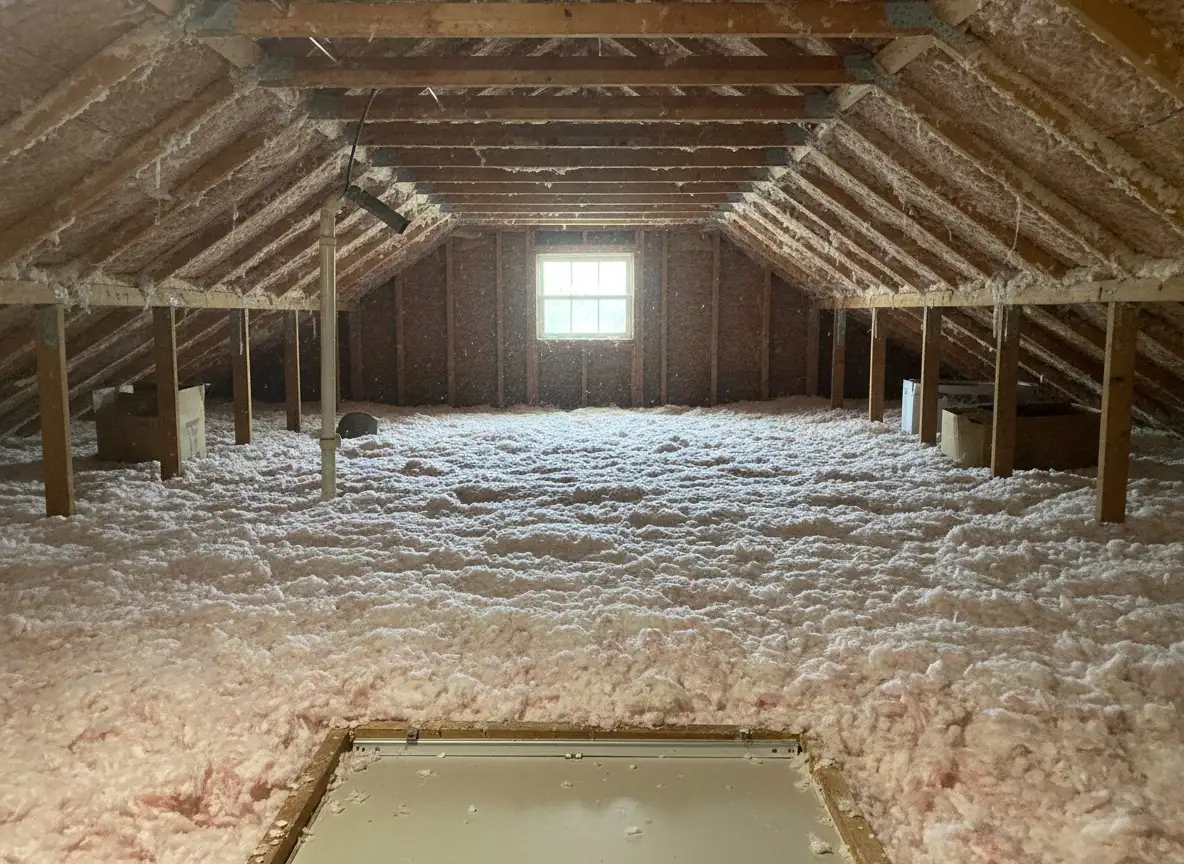
Blown-in insulation describes any loose material—cellulose, fiberglass, or mineral wool—delivered through a large-diameter hose and distributed by air pressure. Cellulose, made from recycled paper treated with borate fire retardants, is the most common blown-in material for existing Montebello homes because it can be dense-packed into closed wall cavities through small holes drilled from the exterior or interior, then patched. This retrofit method avoids the cost of opening walls entirely. Dense-pack cellulose achieves R-3.2 to R-3.8 per inch and, critically, reduces air infiltration within the cavity because the tightly packed fibers resist airflow even though the material itself is not an air barrier. The borate treatment also deters rodents and insects—a meaningful benefit in Montebello neighborhoods where rodent activity in attics and walls is a documented concern. If that is a problem in your home, our Emergency & Rodent-Proofing Services page explains how we address it. Attic loose-fill cellulose is typically blown to a depth of 10–16 inches to achieve the R-38 to R-60 range recommended for Southern California attics under California Energy Code Title 24. After considering blown-in options, mineral wool is worth evaluating for projects where fire resistance or soundproofing is a priority.
Mineral wool insulation
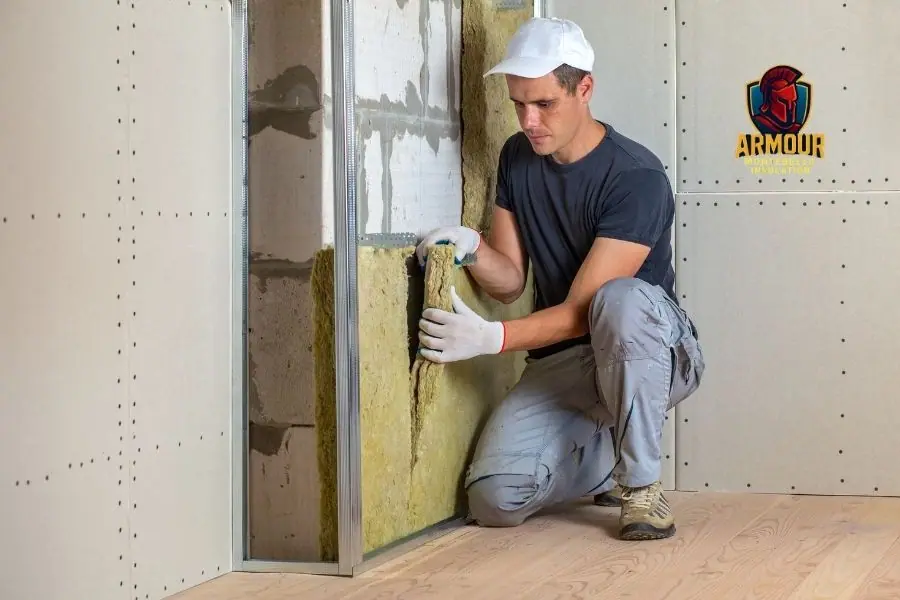
Mineral wool insulation—sold as rock wool or slag wool—is made from molten basalt or steel-industry slag spun into fibers, and it offers properties that fiberglass does not: it is non-combustible at temperatures up to approximately 1,400°F, it is naturally hydrophobic (it does not absorb water), and it provides meaningful sound attenuation. For Montebello homeowners near the 60 Freeway or in higher-density neighborhoods where party-wall noise is an issue, mineral wool batts in interior walls deliver noticeably better sound reduction than standard fiberglass at the same thickness. Mineral wool achieves R-3.0 to R-4.2 per inch depending on density, and its rigidity makes it easier to cut cleanly and fit into cavities without sagging—a common issue with low-density fiberglass batts in tall wall bays. The trade-off is cost: mineral wool typically runs higher per square foot than fiberglass batts, so it is most cost-effective when targeted at specific assemblies where its fire or acoustic performance justifies the premium. Rigid board insulation extends similar fire-resistance and high-R-per-inch performance into continuous applications where batts and blown-in products cannot go.
Insulation board and other rigid options
Rigid insulation board products—expanded polystyrene (EPS), extruded polystyrene (XPS), and polyisocyanurate (polyiso)—are used where a continuous, uninterrupted layer of insulation is needed and cavity space is limited or unavailable. Common applications in Montebello include flat roof assemblies (polyiso above the deck is standard for commercial and residential flat roofs), garage doors, basement slab edges, and exterior continuous insulation added during re-siding projects to eliminate thermal bridging through studs. Polyiso achieves R-5.5 to R-6.5 per inch and is the most common choice for low-slope roofing. XPS achieves R-5 per inch and resists moisture well, making it appropriate for below-grade applications. EPS achieves R-3.6 to R-4.2 per inch at lower cost and is frequently used for garage door panel insulation and under-slab applications. Rigid board must be covered with a thermal barrier (typically ½-inch drywall) on interior applications per California building code—a permit consideration we account for during our project assessment. With the full material picture in view, the next logical step is comparing how these products stack up on the single number most homeowners ask about: R-value.
At a glance
How do R-values compare between insulation types?
R-value measures resistance to heat flow per inch of thickness—the higher the number, the better the insulation performs. The table below summarizes the R-value range, best application, and trade-offs for each material we install.
| Material | R-Value per Inch | Best Application | Pros | Cons |
|---|---|---|---|---|
| Fiberglass batts | R-2.9 to R-3.8 | Open wall and floor cavities, attic floors | Low cost, widely available, easy retrofit in open cavities | Does not air-seal; performance drops with gaps or compression |
| Loose-fill fiberglass | R-2.2 to R-2.7 | Attic floors (blown depth) | Covers irregular surfaces, faster attic coverage | Can settle; lowest R per inch of loose-fill options |
| Cellulose (dense-pack) | R-3.2 to R-3.8 | Closed wall cavities, attic floors | Retrofit-friendly, reduces air infiltration, pest-resistant | Requires professional blower; can absorb moisture if not managed |
| Mineral wool (rock wool) | R-3.0 to R-4.2 | Walls, ceilings, party walls (sound) | Fire-resistant, hydrophobic, excellent soundproofing | Higher cost than fiberglass; heavier to handle |
| Open-cell spray foam | R-3.5 to R-3.7 | Interior walls, attic undersides | Air-seals while insulating; vapor-open; expands into voids | Requires professional application; not moisture-barrier |
| Closed-cell spray foam | R-6.0 to R-7.0 | Crawl spaces, exterior walls, flat roofs | Highest R per inch; vapor retarder; adds structural rigidity | Highest material cost; requires professional application |
| EPS rigid board | R-3.6 to R-4.2 | Under-slab, garage doors, continuous exterior | Moisture-resistant, lightweight, low cost | Requires thermal barrier on interior; lower R than XPS or polyiso |
| XPS rigid board | R-5.0 | Below-grade, exterior continuous | High moisture resistance, consistent R-value over time | Higher cost than EPS; requires thermal barrier |
| Polyiso rigid board | R-5.5 to R-6.5 | Flat and low-slope roofing | Highest R per inch of rigid board; lightweight | R-value decreases in very cold temperatures (less relevant in Montebello) |
R-value alone does not tell the whole story—air leakage, moisture management, and cavity dimensions all affect real-world performance, which is why the best material for each area of the home differs from the material with the highest R per inch.
Which insulation type is best for attics, walls, crawl spaces and garages?
The best insulation for each area of the home depends on access, moisture exposure, and the depth of cavity available. The guide below reflects typical Montebello housing conditions.
At a glance
How much does each type of insulation cost in Montebello?
Insulation costs in Montebello vary based on a combination of project-specific factors rather than a fixed price per material. We provide written quotes after a free inspection because two homes with identical square footage can carry significantly different costs depending on the factors below.
| Cost Factor | Why It Affects Price |
|---|---|
| Area to be insulated (sq ft) | Larger areas require more material and labor hours |
| Material selected | Closed-cell spray foam costs more per sq ft than fiberglass batts; each material sits at a different price point |
| Existing insulation removal | Rodent-damaged or mold-contaminated old insulation must be removed and disposed of before new material is installed |
| Attic pitch and access | Low-pitch or complex attic geometry increases labor time; limited access hatches may require enlargement |
| Open vs. closed cavity | Dense-pack retrofit into existing walls adds drilling and patching labor not present in open-cavity installation |
| Air sealing required | Sealing penetrations, top plates, and recessed lights before insulating adds labor but significantly improves performance |
| Permits | Some California jurisdictions require permits for attic insulation upgrades, particularly under Title 24 compliance projects; permit fees vary by municipality |
| Damage extent | Rodent intrusion, moisture damage, or prior fire damage extends scope and cost beyond standard installation |
Financing is available for qualifying projects, and we assist homeowners with insurance claims where damage to existing insulation is covered. For a full breakdown of cost factors across all project types, see our insulation cost guide. Call us at (323) 741-5848 to schedule a free inspection and receive a written quote with no obligation.
How do you choose the right insulation material for your home?
Choosing the right insulation material comes down to four decision points applied in order: cavity access, target R-value, moisture and air conditions, and budget. Work through these sequentially and the field narrows quickly.
- Is the cavity open or closed? Open cavities accept batts, rigid board, or spray foam. Closed cavities require blown-in products or spray foam applied through access holes.
- What R-value does California Title 24 require for this assembly? Attics in Climate Zone 9 (which covers Montebello) typically require R-38 minimum; walls require R-13 to R-21 depending on framing. If your existing insulation falls short, you may need to add depth or switch materials to reach compliance.
- Is moisture, rodent activity, or air infiltration a documented problem? If yes, choose a material that addresses those conditions: closed-cell foam for moisture and air, dense-pack cellulose for air and pest resistance, mineral wool for moisture tolerance.
- What is your budget and timeline? Fiberglass batts in open cavities offer the fastest installation at the lowest material cost. Spray foam costs more upfront but eliminates the need for separate air sealing. Weigh the long-term energy savings against the upfront difference.
Read moreShow less
A practical rule specific to Montebello's older housing stock: if the home was built before 1980 and has never had insulation work done, the single highest-return action is air sealing the attic top plates and bypasses before adding any blown-in product, because air movement through those gaps degrades the performance of whatever insulation sits above them. We assess this during every free inspection. If you are still unsure after working through these steps, the next section explains how we help you decide.
Not sure which material fits your home?
We walk through each of these decision points with you during a free on-site inspection, so you leave with a specific recommendation rather than a list of possibilities. Armour Montebello Insulation serves Montebello and surrounding communities including Commerce, Pico Rivera, Monterey Park, East Los Angeles, Whittier, Rosemead, Alhambra, Downey, South Gate, Norwalk, Bell Gardens, Los Angeles, South Pasadena, El Monte, Compton, Pasadena, Long Beach, and Anaheim, and the page on our insulation service areas near Montebello lays out that coverage in full. Our trained technicians assess your existing insulation, measure actual R-values in place, identify air leakage paths and any rodent or moisture damage, and provide a written quote covering the material and scope we recommend. We offer 24/7 emergency service for situations involving rodent damage or other urgent insulation failures. Financing is available, and we assist with insurance claims where applicable.
Call (323) 741-5848 to schedule your free inspection, or use our online form to request an estimate at your convenience.
FAQ
FAQ
What is the most common type of insulation?
Fiberglass batts are the most common insulation type installed in U.S. homes, including most of the mid-century housing stock throughout Montebello, CA. Their low cost and straightforward installation in open stud bays made them the standard choice for decades. Blown-in cellulose has become increasingly common for retrofit projects because it can be installed in existing closed wall cavities without opening walls.
Is spray foam better than fiberglass?
Spray foam performs better than fiberglass in two specific ways: it air-seals while it insulates, and closed-cell foam achieves higher R-value per inch. However, "better" depends on the application. Fiberglass batts installed correctly in an open cavity during new construction are cost-effective and perform adequately when the air barrier is addressed separately. Spray foam is the better choice for irregular cavities, areas with moisture exposure, or assemblies where air sealing and insulation must be combined in a single step, such as crawl spaces and unvented attic assemblies.
Which insulation is best for Southern California heat?
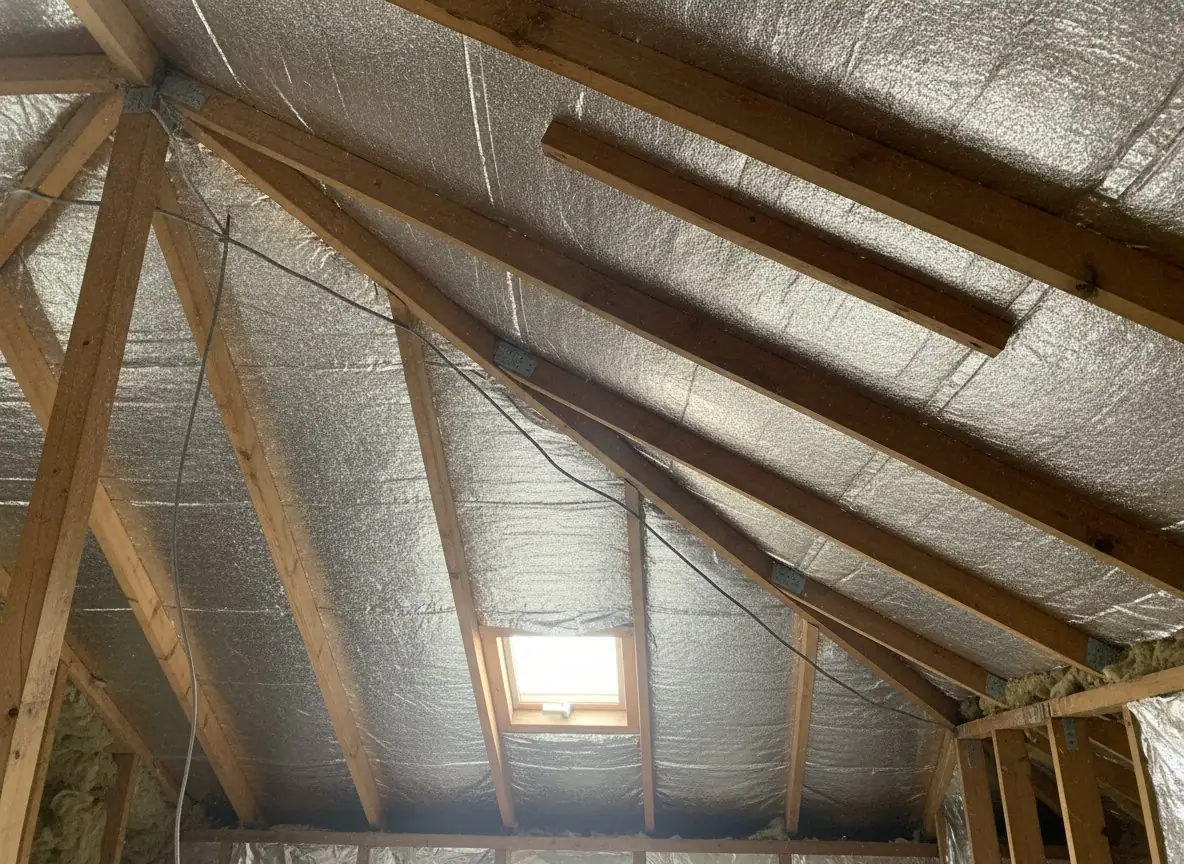
In Southern California's climate—including Montebello's hot, dry summers in Climate Zone 9—the most effective strategy is a combination of high R-value at the attic level and comprehensive air sealing. Radiant heat from the roof deck is the dominant summer heat gain pathway. Dense-pack cellulose or blown fiberglass at R-38 to R-60 on the attic floor, paired with air sealing at all top-plate penetrations, addresses the primary heat load. For unvented attic designs, closed-cell spray foam on the underside of the roof deck is the correct material. Reflective barriers can supplement but do not replace R-value.
Which insulation is best for soundproofing?
Mineral wool (rock wool) batts provide the best sound attenuation of any standard cavity insulation material, outperforming fiberglass at the same thickness due to their higher density. For party walls, floor-ceiling assemblies, or rooms adjacent to mechanical equipment, mineral wool is the targeted choice. Dense-pack cellulose also reduces airborne sound transmission and is a strong second choice for retrofit applications where the wall cavity is already closed. Spray foam provides air sealing but less sound absorption than mineral wool or cellulose.
Can different insulation types be combined?
Yes, and combining materials is often the most effective approach. A common example in Montebello attics is applying closed-cell spray foam to seal the top-plate bypasses and around penetrations, then covering the attic floor with blown-in cellulose to achieve the target R-value—each material does what it does best. Rigid board on the exterior of a wall combined with batts in the cavity is another standard combination that eliminates thermal bridging through studs while keeping material costs lower than spray foam alone. We identify the right combination for your specific assembly during the free inspection.
Ready to identify the right insulation material for your Montebello home? Contact the Armour insulation contractor in Montebello for a free, no-obligation inspection and written estimate. Call (323) 741-5848 today—we serve Montebello and all surrounding communities, with 24/7 emergency availability.
Why choose us
Why choose Armour Montebello Insulation?
Free estimates
Get a clear, no-obligation estimate before any work begins.
Licensed & insured
Your property and our crew are protected on every project.
Residential & commercial
One team for homes, multi-family and commercial properties.
Locally owned & operated
A local team serving your community and the surrounding area.
Get in touch
Find insulation help near you
Request a free estimate online or give us a call — our team will follow up quickly.
- Call us(323) 741-5848
- Visit1125 S Maple Ave, Montebello, CA 90640
- HoursMon-Sun 07:00-19:00