Mineral wool insulation is one of the most thermally and acoustically capable insulation materials available to homeowners in Montebello, CA, and Armour Montebello Insulation installs it in walls, ceilings, attics, and specialty assemblies throughout the area. Montebello's warm, dry summers and mild winters create a climate where air sealing and thermal resistance matter as much as seasonal extremes do in colder regions — and mineral wool's density and dimensional stability make it well suited to that demand. This page explains exactly what mineral wool is, how it performs, what it costs to install, and where it makes the most sense in a local home or commercial building.
What is mineral wool insulation, and is rock wool the same thing?
Mineral wool insulation is a dense, fibrous material made by spinning molten rock or industrial slag into fine fibers, and rock wool is simply the most common name for the same product. The terms "mineral wool," "rock wool," "stone wool," and "mineral fiber insulation" all describe the same manufacturing category. When people say "mineral insulation" or search for "mineral wool rock wool," they are looking for identical materials. The brand name ROCKWOOL (stylized in all caps) refers to a specific Danish manufacturer whose products — including widely used batts and boards — have made the brand nearly synonymous with the category in North America.
Rock wool differs from fiberglass in its raw material and density. Fiberglass starts with sand and recycled glass; mineral wool starts with basalt rock or blast-furnace slag. That difference in origin produces a denser, heavier batt that behaves differently in every performance category that matters for building insulation. Understanding what it is made of explains most of its strengths — and its trade-offs.
What is Rockwool made of?
ROCKWOOL products are made primarily from basalt rock and recycled slag, which together account for roughly 70 percent or more of the raw material content. Basalt is melted at extremely high temperatures, then spun or blown into fibers that are compressed into batts, boards, or loose fill. A small percentage of binder is added to hold the fibers together and give the product its shape.
The mineral origin of the fiber is what gives rock wool its non-combustible core. Basalt does not burn; it was already formed by heat far exceeding anything a residential structure fire produces. Slag — a byproduct of steel manufacturing — shares the same inorganic, heat-stable chemistry. Neither material feeds flames, and neither releases significant smoke when exposed to fire. This raw-material advantage is not a coating or treatment applied after manufacturing; it is inherent to what mineral wool is made of.
Free, no-obligation estimates
Talk to Armour Montebello Insulation
Tell us what you need and we’ll take it from there.
At a glance
Is mineral wool good for insulation?
Mineral wool is an excellent insulation material for most residential and commercial applications, particularly where fire resistance, sound control, or moisture exposure are concerns. Its dense fiber structure resists heat transfer, absorbs airborne sound, repels water, and holds its shape in wall and ceiling cavities without sagging over time — a failure mode that reduces long-term performance in lower-density batts.
In Montebello homes, many of which were built between the 1940s and 1980s with standard wood framing, mineral wool batts fit standard 2×4 and 2×6 stud bays without modification. The material's rigidity means it stays in contact with framing edges rather than pulling away, which reduces thermal bridging and air movement through the cavity. For homeowners weighing batt insulation options, here is how mineral wool compares directly to fiberglass:
| Performance Category | Mineral Wool | Fiberglass |
|---|---|---|
| Fire resistance | Non-combustible; withstands temperatures above 2,000°F | Melts at much lower temperatures; not non-combustible |
| Sound dampening | High density absorbs airborne and impact noise effectively | Moderate; lower density absorbs less mid-range sound |
| Moisture resistance | Water-repellent; does not support mold or mildew growth | Absorbs moisture; can lose R-value and harbor mold if wet |
| Material cost | Typically higher per square foot | Typically lower per square foot |
| Handling | Rigid; easier to cut cleanly; produces mineral dust and skin irritation | Flexible; produces fine glass fibers; also causes skin irritation |
The density advantage that makes mineral wool a superior sound and fire performer also explains its higher cost — a topic worth examining in its own right.
What is the R-value for mineral wool insulation?
Mineral wool batts typically achieve an R-value per inch that is modestly higher than standard fiberglass batts, but the exact figure depends on product density, thickness, and the specific product tested. We do not publish invented figures here because R-values are product-specific and must be verified against the manufacturer's current data sheet.
As a general framework:
- A mineral wool batt designed for a 2×4 stud bay (approximately 3.5 inches thick) typically carries an R-value in the mid-to-upper teens. The ROCKWOOL R15 batt is formulated specifically to fit a 2×4 cavity and deliver R-15 thermal resistance — confirm the current specification at rockwool.com before specifying.
- A mineral wool batt for a 2×6 stud bay (approximately 5.5 inches thick) typically carries an R-value in the low-to-mid twenties.
- Mineral wool boards used in continuous exterior insulation applications carry their own rated R-values and are installed in addition to cavity insulation, not instead of it.
Read moreShow less
California's Title 24 energy code sets minimum R-value requirements that vary by climate zone. Montebello falls within Climate Zone 9. We review current code minimums during the free inspection and confirm that the specified product meets or exceeds them. R-value alone does not capture the full thermal picture — air movement through a cavity and thermal bridging through framing both reduce real-world performance, areas where mineral wool's rigidity provides a measurable advantage over softer batts.
What are the disadvantages of mineral wool?
Mineral wool's main disadvantages are its higher material cost, the skin and respiratory irritation it produces during cutting and installation, and its greater weight compared to fiberglass.
Here is a balanced pros and cons summary:
- Pro: Non-combustible; does not fuel or accelerate a fire
- Pro: High acoustic performance in wall and floor assemblies
- Pro: Water-repellent; will not sag or lose shape when exposed to incidental moisture
- Pro: Dimensionally stable; stays in contact with framing edges over time
- Pro: Compatible with standard framing bays; no special framing required
- Con: Higher per-square-foot material cost than fiberglass batts
- Con: Cutting produces mineral dust that requires eye protection, gloves, and an N95 or better respirator
- Con: Heavier than fiberglass; more physically demanding to handle in overhead installations
- Con: Not appropriate for every application — high-heat industrial uses require specific high-temperature board products, not standard residential batts
The irritation risk during installation is real but manageable with proper personal protective equipment, which brings up a natural question about handling safety.
Is Rockwool safe to handle?
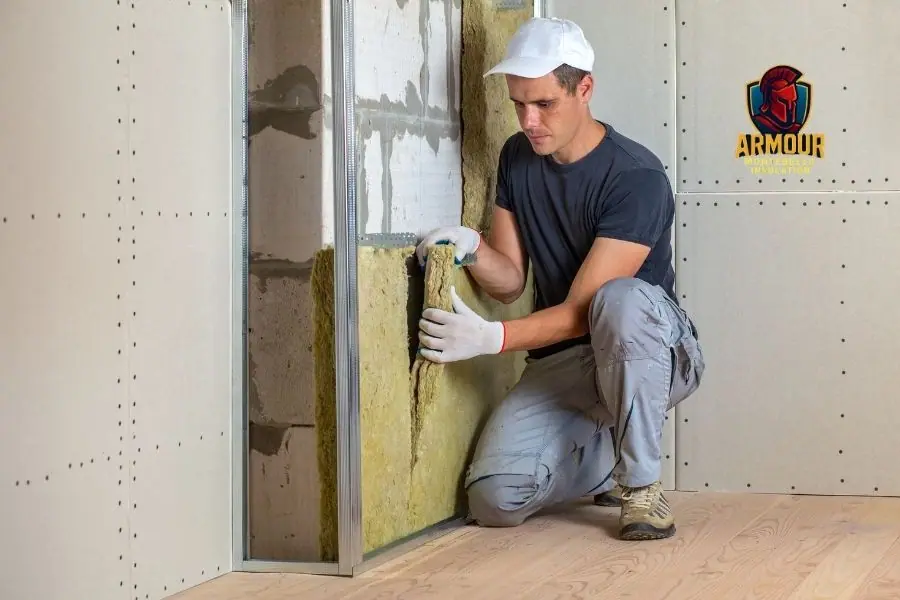
ROCKWOOL and other mineral wool products are safe to handle when proper protective equipment is used, but direct skin contact and inhalation of mineral fibers during cutting cause irritation that should not be ignored. The fibers are classified as a nuisance irritant — not a known carcinogen at the fiber dimensions used in building insulation — but they do cause temporary skin, eye, and throat irritation.
Our trained technicians follow these safe-handling steps on every mineral wool installation:
- Wear long sleeves, gloves, and safety glasses before opening packaging.
- Use an N95 or higher-rated respirator when cutting batts, particularly in enclosed spaces.
- Score and snap, or use a sharp serrated knife, to minimize airborne fiber release during cutting.
- Ventilate the work area during and after installation.
- Wash exposed skin with soap and cold water (not hot — heat opens pores and embeds fibers) immediately after handling.
Read moreShow less
Homeowners who choose to assist with a mineral wool project should follow the same precautions. When we handle the full installation, occupants can re-enter the finished space once surfaces are covered and airborne fibers have settled — typically after the installation is complete and any drywall work is underway. Proper handling also affects how well the material performs against an unexpected pest concern.
Do mice chew through rockwool insulation?
Mice and other rodents do not typically chew through or nest in mineral wool insulation the way they do in fiberglass or cellulose. The dense, inorganic mineral fiber structure is not attractive nesting material, and rodents find it uncomfortable to push through. Mineral wool does not provide food value, warmth retention for nesting, or the soft texture that rodents prefer.
This is a practical advantage for older Montebello homes, many of which were built before modern rodent-proofing standards and may have gaps in the building envelope that allow entry. While mineral wool's texture discourages nesting, it is not a substitute for sealing entry points. For homes with those gaps, Armour Montebello Insulation offers Emergency & Rodent-Proofing Services that address the structural gaps first, then install insulation in a protected cavity. Mineral wool's rodent-resistance makes it a logical choice in walls where rodent activity has been a past problem. That rodent-resistant quality pairs well with another topic homeowners ask about: specific ROCKWOOL product lines.
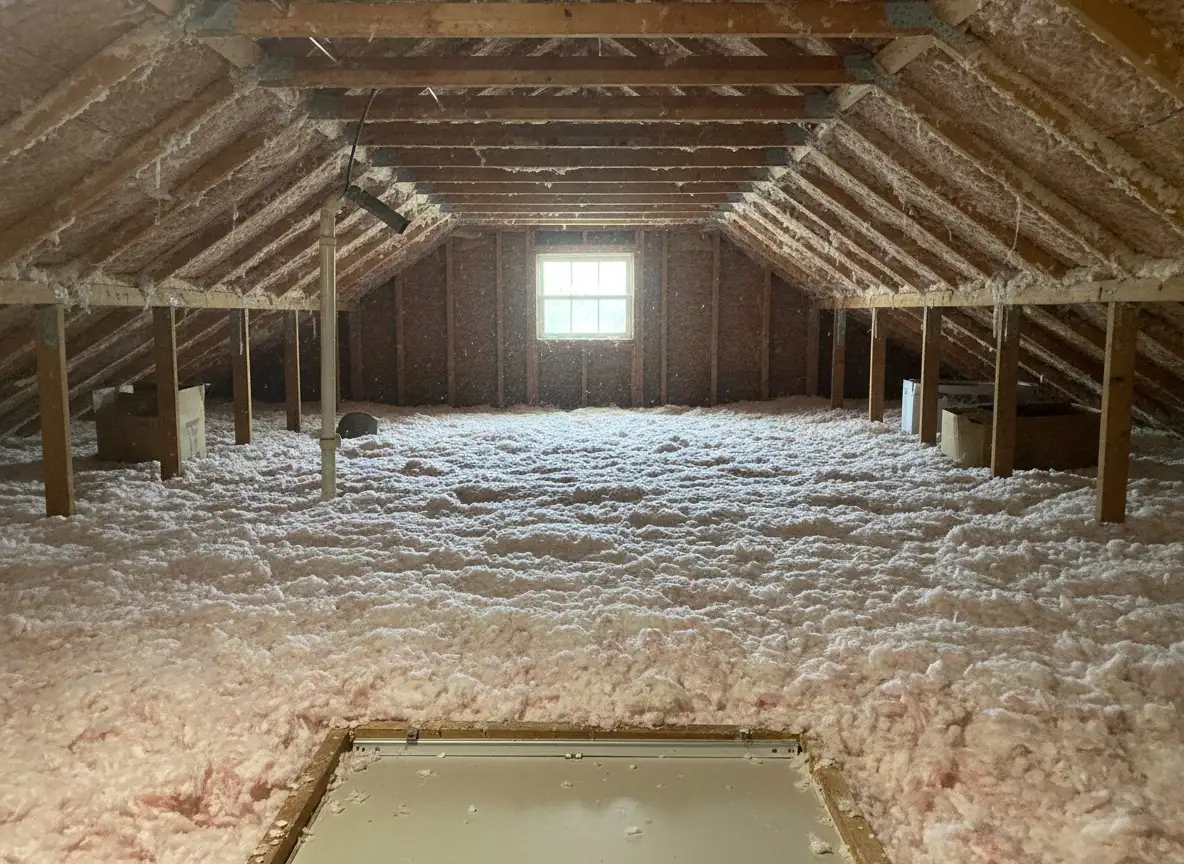
What are Rockwool R15 and Rainbarrier 45 used for?
ROCKWOOL R15 is a residential batt product designed for 2×4 stud cavities, delivering R-15 thermal resistance while also providing fire resistance and sound attenuation in interior and exterior wall assemblies. Rainbarrier 45 is a semi-rigid mineral wool board product designed for exterior continuous insulation applications — primarily rain-screen and cavity-wall cladding systems — where it provides thermal performance, drainage, and weather-resistive properties. Both products are part of ROCKWOOL's North American building product line.
Important note: Product specifications, dimensions, R-values, fire ratings, and code-compliance listings change. Always confirm current specifications against official ROCKWOOL manufacturer data at rockwool.com before specifying either product for a project. We identify the right product for each specific application during the free inspection and confirm compatibility with the framing, cladding system, and applicable California building code requirements. Understanding where specific products fit leads to the broader cost question most homeowners need answered before moving forward.
At a glance
How much does mineral wool insulation cost in Montebello?
Mineral wool insulation typically costs more per square foot than fiberglass, but the total project cost in Montebello depends on several factors that vary significantly from home to home. We provide a written quote after a free inspection — no estimates are made without seeing the actual conditions.
| Cost Factor | Why It Affects Price |
|---|---|
| Total square footage | More area requires more material and more labor hours |
| Product selected | Sound-rated batts, fire-rated batts, and exterior boards carry different material costs |
| Framing type and cavity depth | 2×4 vs. 2×6 framing determines batt thickness and unit cost |
| Existing insulation removal | Tear-out and disposal of old material adds labor and disposal cost |
| Access difficulty | Tight attic pitches, crawl spaces, and enclosed walls increase labor time |
| Rodent or moisture remediation | Required before new insulation can be installed; billed separately |
| Permit requirements | Some Montebello projects require a building permit; permit fees vary |
| Financing | Financing is available; it does not change the installed cost but affects payment structure |
We also help homeowners navigate insurance claims where insulation damage is part of a covered loss. If that sounds like your situation, the next step is simple. Contact us for a free inspection, and we provide a written estimate with no obligation.
Where is mineral wool used in Montebello homes, and how do I get a free estimate?
Montebello's housing stock — predominantly single-family homes and duplexes built from the postwar era through the 1980s — presents several locations where mineral wool outperforms standard fiberglass. Here are the best-use locations we see most often:
- Interior partition walls between rooms or units: Mineral wool's density absorbs airborne sound between bedrooms, home offices, and living spaces far more effectively than standard fiberglass batts.
- Fire-rated wall and floor assemblies: Garage-to-living-space separations and multi-unit fire walls often require non-combustible insulation to meet building code. Mineral wool satisfies that requirement without added intumescent coatings.
- Exterior walls in older Montebello homes: Homes that have never been insulated, or that have degraded fiberglass from moisture or rodents, benefit from mineral wool's water-repellent and dimensionally stable properties when walls are opened for remodel.
- Attic knee walls and sloped ceilings: Rigid mineral wool batts stay in place in angled or confined cavities where softer materials sag or pull away.
- Garage walls and ceilings: Fire separation requirements and temperature extremes in unfinished garages make mineral wool a practical choice.
- Commercial and specialty spaces: We also install mineral wool in commercial buildings, including HVAC and duct insulation applications, throughout Montebello and nearby areas including Commerce, Pico Rivera, Monterey Park, East Los Angeles, Whittier, Rosemead, Alhambra, Downey, South Gate, Norwalk, Bell Gardens, Los Angeles, South Pasadena, El Monte, Compton, Pasadena, Long Beach, and Anaheim.
Read moreShow less
To get a free estimate in Montebello, call us or submit a request online. As your Montebello insulation contractor, our trained technicians assess the existing conditions, identify the right mineral wool product for each location, and provide a written quote. We offer 24/7 emergency service for urgent situations, and financing is available. We also assist homeowners with insurance claims when insulation damage is part of a covered loss.
Call Armour Montebello Insulation at (323) 741-5848 to schedule your free inspection today.
FAQ
FAQ
Is mineral wool the same as fiberglass insulation?
No. Mineral wool is made from spun molten rock or slag. Fiberglass is made from spun glass fibers. The two materials perform differently in fire resistance, sound absorption, moisture handling, and cost. Mineral wool is non-combustible and denser; fiberglass is less expensive and more flexible. Both are installed as batts in standard framing bays, but they are distinct products with different performance profiles.
Is mineral wool waterproof?
Mineral wool is water-repellent, not fully waterproof. Its fibers are treated to resist moisture absorption, and water beads off the surface rather than soaking in. This means mineral wool will not absorb incidental moisture, will not support mold or mildew growth, and will not lose R-value from normal condensation exposure. It is not, however, a drainage product or a substitute for a proper vapor barrier or water management system.
Can mineral wool go in an attic or only in walls?
Mineral wool can be installed in attics as well as walls. Rigid mineral wool batts work well in attic knee walls, sloped ceiling cavities, and any framed attic assembly. Loose mineral wool is also available for flat attic floor applications. In Montebello attics, where summer heat gain is a primary concern, mineral wool's dimensional stability keeps it performing consistently in high-temperature conditions where softer materials may compress or shift.
Does mineral wool help with soundproofing between rooms?
Yes. Mineral wool's higher density compared to standard fiberglass batts makes it significantly more effective at absorbing airborne sound in interior wall and floor assemblies. It is a common choice for walls between bedrooms, home theaters, music rooms, and party walls in multi-unit buildings. For maximum sound isolation, mineral wool is typically used alongside resilient channels or acoustic drywall — our trained technicians can advise on the full assembly.
Is mineral wool fireproof?
Mineral wool is non-combustible, which means it does not ignite, fuel flames, or produce significant smoke when exposed to fire. It withstands temperatures above 2,000°F. The term "fireproof" is not used in building codes — the correct term is "non-combustible" or "fire-resistant." Mineral wool qualifies as non-combustible, which is why it is used in fire-rated wall and floor assemblies where building codes require materials that will not contribute to fire spread.
Can Armour install mineral wool in my garage or commercial space in Montebello?
Yes. Armour Montebello Insulation installs mineral wool in residential garages, commercial buildings, and specialty spaces throughout Montebello and the surrounding service area. Garage installations often involve fire-separation walls and ceilings where non-combustible insulation is required by code. Commercial applications include wall assemblies, HVAC and duct insulation, and specialty high-temperature assemblies. Contact us at (323) 741-5848 to schedule a free inspection for your Montebello project.
Why choose us
Why choose Armour Montebello Insulation?
Free estimates
Get a clear, no-obligation estimate before any work begins.
Licensed & insured
Your property and our crew are protected on every project.
Residential & commercial
One team for homes, multi-family and commercial properties.
Locally owned & operated
A local team serving your community and the surrounding area.
Get in touch
Find insulation help near you
Request a free estimate online or give us a call — our team will follow up quickly.
- Call us(323) 741-5848
- Visit1125 S Maple Ave, Montebello, CA 90640
- HoursMon-Sun 07:00-19:00